 UZB
UZB IRN
IRN NAM
NAM CGO
CGO COD
COD EQG
EQG MTN
MTN CTA
CTA LBY
LBY BOT
BOT CMR
CMR COM
COM CIV
CIV GHA
GHA SLE
SLE ZIM
ZIM TUN
TUN UGA
UGA PUR
PUR GUY
GUY DOM
DOM NCA
NCA CAY
CAY DMA
DMA HAI
HAI TRI
TRI CRC
CRC CUW
CUW OHI
OHI SCR
SCR EVE
EVE UCH
UCH CAE
CAE ROU
ROU MUN
MUN ALE
ALE LPZ
LPZ MIN
MIN AND
AND MLT
MLT NED
NED GER
GER SRB
SRB GRE
GRE POR
POR WAL
WAL NOR
NOR DEN
DEN LIE
LIE LTU
LTU KVX
KVX IRL
IRL AUT
AUT ISR
ISR BEL
BEL SAN
SAN ENG
ENG CHN
CHN VIE
VIE PRK
PRK CHI
CHIAFCON 2027 Qualifying Kicks Off With Nigeria Against the Ropes and Renard Back in Ivory Coast
The new format leaves several national teams fighting over a single spot, while Chelle, Renard, Queiroz and Vieira begin new cycles under pressure and amid key absences.

The first international break of the 2026-27 season is underway, and in Africa that means far more than a handful of throwaway friendlies. It marks the starting gun for AFCON 2027, set to be played in July under the slogan Pamoja '27, and it arrives right as several major national teams try to turn the page after a World Cup that left open wounds. New coaches, old ghosts and a qualifying format with zero room for error: that's the mix on the table.
A format that squeezes from the start
The draw produced 12 groups of four teams, with the top two from each advancing to a 24-team tournament. But there's a catch: since Kenya, Uganda and Tanzania already have their spots locked up as hosts, in the groups where they land only the best of the remaining teams can qualify, not two. That sets up some brutal head to head battles: South Africa and Guinea are fighting over a single ticket, Tunisia has to fend off Libya and Botswana, and Nigeria shares a group with Madagascar and Guinea-Bissau, two teams that have both reached AFCON recently. With just six matches across the entire phase, there's no margin for a slow start.
Nigeria, up against it
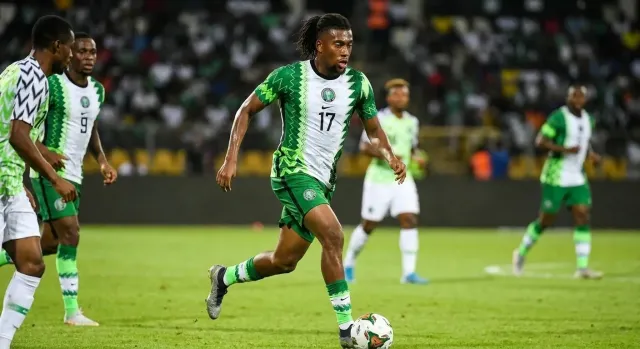
If there's one national team that cannot afford to slip up, it's Nigeria. Nigerian soccer is going through a rough patch: the men missed out on this year's World Cup, the women missed out on next year's, and there's been a noticeable dip across the youth ranks. Against that backdrop, Eric Chelle has been tasked with building on the good the Super Eagles showed in the semifinals of the last Africa Cup of Nations in Morocco. It won't be easy: the absence of Victor Osimhen through injury complicates the opening stretch, in a group where, as noted above, there's only one spot up for grabs besides the host's.
Renard returns to Ivory Coast
The window's most striking reunion plays out in Bouake, where Herve Renard makes his debut in his second stint in charge of the Elephants, and against Ghana no less. More than 11 years have passed since the Frenchman led Ivory Coast to the AFCON 2015 title in Bata, and now he returns to a revamped locker room, one built around a generation that already reached the World Cup round of 16 and won the Africa Cup of Nations on home soil in 2024. Renard himself tempered expectations ahead of the clash:
Favorites, that's just on paper. Qualification is earned on the field.Herve Renard
Ivory Coast hosts Ghana on Thursday and then travels to face Somalia in Abidjan.
Queiroz back in Ghana amid doubts
While Renard's return was celebrated in Ivory Coast, the reappointment of Carlos Queiroz as Ghana's coach, barely two months after their World Cup elimination, did not draw the same enthusiasm. Queiroz had arrived in April and left the Black Stars competitive in North America, with a draw against England and a win over Panama that earned them a spot in the round of 16 for the first time in 16 years. But his cautious style never fully won people over, and when Ghana fell to Colombia in the round of 32 it looked like he'd leave without many tears shed. Now he's back, missing key names like Mohammed Kudus and Thomas Partey, on top of Inaki Williams's retirement, and he himself admitted there are "holes in the boat."
Vieira, the boldest gamble
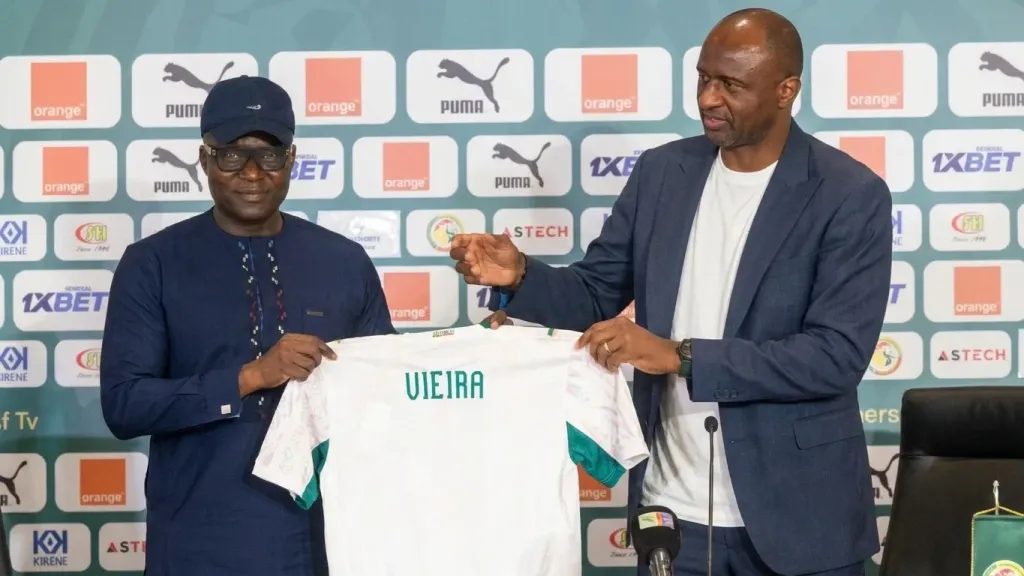
Senegal went through a chaotic World Cup and decided to part ways with Pape Thiaw despite his success at the last AFCON, opting instead for Patrick Vieira, a World Cup winner as a player and a Dakar native. It's arguably the most intriguing appointment of the new African cycle, especially given that his coaching career in England, France and the United States hasn't exactly been convincing. At his introduction in the Senegalese capital, he delivered this message:
This isn't about starting from zero. It's about respecting what the Federation has built over the past few years and, with that continuity, opening a new chapter.Patrick Vieira
The coach arrives amid internal tensions within the federation, controversies during the World Cup, and even an attempt to pin blame on the team doctor following the elimination against Belgium. Vieira will begin his qualifying campaign against Mozambique and Ethiopia.
Mosimane seeks redemption, Bettencourt inherits the Cape Verde miracle
In South Africa, Pitso Mosimane returns to the national bench years after the failed AFCON 2012 qualifying campaign and the shaky start toward the 2014 World Cup. Since then he has established himself as one of the continent's most decorated coaches, winning three African Champions League titles with Mamelodi Sundowns and finding success in Egypt and Saudi Arabia. He now takes over from Hugo Broos with the mission of succeeding where he once fell short.
Cape Verde, one of the World Cup's big surprises, faces a different kind of challenge: the departure of longtime coach Bubista for Morocco's RS Berkane. Under his guidance, the island nation climbed to 64th in the FIFA rankings and pushed Argentina to the brink in a tight elimination match. The federation chose continuity, promoting longtime assistant Humberto Bettencourt, who will make his debut with a trip to face Mali.
Algeria and Tunisia, forced rebuilds
In North Africa, both Algeria and Tunisia are undergoing deep overhauls. Brahim Hemdani takes charge of the senior national team for the first time, replacing the unpopular Vladimir Petkovic, leaving out names like Houssem Amour and Hicham Boudaoui, and also managing Riyad Mahrez's international retirement. His playing philosophy came through clearly in his first remarks: "We're going to put forward a game plan that matches Algeria's identity: playing forward and taking the initiative."
Tunisia, meanwhile, arrives battered after a disastrous World Cup in which the team burned through two coaches (one of them Renard himself) and exited without a single point and a goal difference of minus 10. Now it falls to Mounine Chaabani to restore confidence in a squad that lost it completely.
A schedule stirring up frustration
The expanded September-October FIFA window was supposed to ease the travel burden on players, but CAF scheduled the qualifying matches at the start of the period, leaving several national teams playing friendlies with little purpose afterward or simply waiting around before returning to their clubs. It's a decision that once again raises the familiar questions about whether CAF truly prioritizes players' sporting preparation and well-being.