 ATL
 TOR
 NSH
 RBNY
 SMT
 COL
 GTI
 QAC
 SUP
 CAV
 GRE
 ATL
 GUA
 BOL
 LA
 BOS
 BAY
 SD
 GFC
 UTA
 HOU
 POR
 NC
 DEN
 LOU
 KC
 SEA
 ORL
 WAS
 CHI
 GUA
 LIB
 BEL
 BAC
 NOB
 UNI
 NE
 MIA
 LAF
 MIN
 POR
 HOU
 CSL
 NCX
 CAZ
 LEO
 VAR
 MOR
 ISF
 ONC
 ATL
 ALI
 AGU
 FAS
 ANT
 MUN
 GUA
 COB
 COM
 MIX
 MOT
 MAR
 OLA
 FCU
 CAR
 WAH
 HAT
 JAZ
 BAN
 SHJ
 NAS
 PZH
 MTK
Barcelona Still Chasing Its First Champions League Since 2015, Now With Rodri in Midfield
The Catalan club opens its third season under the German manager as a genuine contender, though questions remain on defense and up front without a marquee striker.

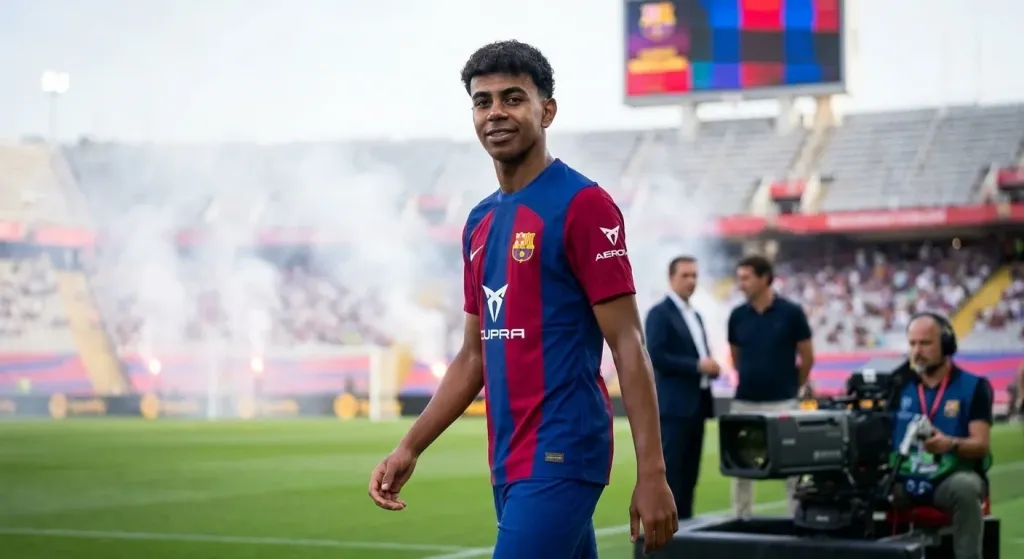
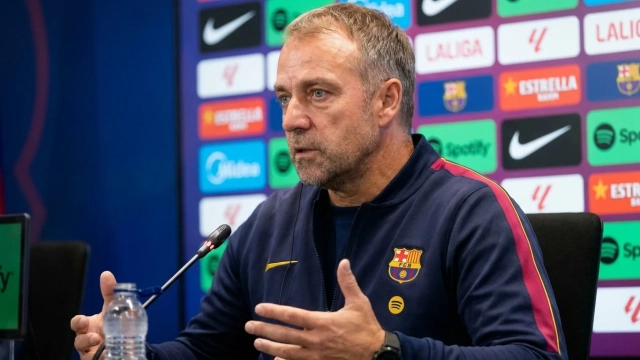
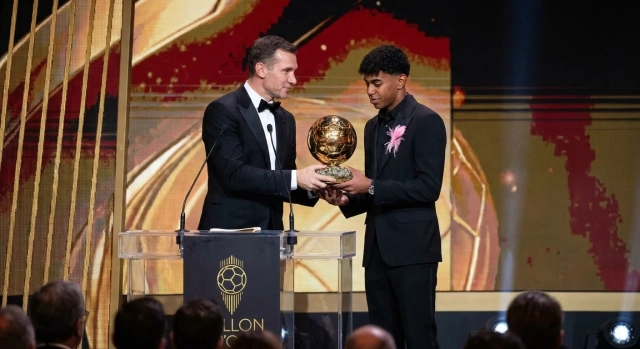
A 5-0 win to open the season, Raphinha playing as a false nine, and a midfield that suddenly includes a Ballon d'Or winner. That's how Hansi Flick's third season at Barcelona begins, with the same old target still standing right there: the 2026-27 Champions League.
Barcelona hasn't lifted the trophy since 2015, and as the years have gone by, that wait has turned into something close to an obsession. Under Flick, the club has already won two La Liga titles, two Spanish Super Cups and a Copa del Rey, but the European title is still outstanding. That, without question, is the one box this project has yet to check.
What the German coach has managed to do is restore something the team had been missing for a while: real competitiveness in Europe's top competition. In his first two seasons, Barça finished among the continent's top eight, and in the first of those campaigns came agonizingly close to reaching the final, falling to Inter in extra time.
More experience, and the arrival of Rodri
Midfield was already a strength, and now it's gained a reinforcement on a different level entirely. Rodri arrives at Camp Nou with something money can't buy in any transfer market: the experience of winning a Champions League title while running the show from midfield, as he did with Manchester City. His presence could give the team exactly what it lacked on several European nights: composure, control and a cool head when games get difficult.
That's on top of a group that's no longer short on big-game experience, even if the squad's average age remains young, hovering around just 23.6 years old. Lamine Yamal, Pau Cubarsí, Pedri, Gavi, Dani Olmo and Eric García have all played in high-stakes matches, and Lamine adds the extra credential of having played in a World Cup final.
The defense remains the big question mark
If there's one area still raising doubts, it's the back line. Ronald Araujo's departure left a gap that the club, for now, hasn't filled with a major signing. Flick, instead, is choosing to trust what he already has: Cubarsí as the central reference point, alongside Gerard Martín and Andreas Christensen, plus the versatility of Eric García and Jules Koundé, both of whom can play centerback or right back. There have been changes out wide too, with João Cancelo back in the fold and Alejandro Balde as an option on the left.
For now, we're happy with the defenders we have. There are options like Eric or Koundé who can play in multiple positions. Christensen and Gerard have done well. Cubarsí is one of the best centerbacks in the world.Hansi Flick
The depth is there. The question is whether it will hold up when the nights of March, April and May arrive, the ones that truly matter.
A fast attack, but no true No. 9
This is where the biggest doubt lies: can you win the Champions League without a genuine center forward? The departures of Robert Lewandowski, Ferran Torres and Marcus Rashford, combined with the collapsed negotiations for Julián Álvarez, have left the squad with almost no natural cover in that position.
Far from hiding the problem, Flick seems determined to turn it into an advantage. In the league opener against Elche, he went with a mobile front three of Karim Adeyemi, Lamine Yamal and Raphinha, with the Brazilian playing as a false nine. The result was emphatic: a 5-0 road win, with Raphinha the standout performer thanks to two goals and an assist.
The system gives the team speed and mobility, but the problem could surface in a tight Champions League match, when someone is needed to turn a chance into a goal. Right now the only natural striker on the roster is Hazem Abdelkarim, just 18 years old, so Fermín López, Dani Olmo and even Lamine himself will have to rotate through that role at certain points.
Depth on the wings
Where the club did invest was out wide. Anthony Gordon arrived and made an immediate impact, picking up two assists on his debut despite limited minutes. Adeyemi brings speed to attack space, and Bisiwu is emerging as a project for the future, shuttling between the first team and the reserves. Flick's idea seems clear: if there's no traditional No. 9, let the danger come from everywhere.
Could this finally be the year?
Barcelona has real reasons for optimism: a coach who has already proven he can compete in Europe, a young core racking up big games at a rapid pace, a midfield strengthened by a Champions League and World Cup winner, and an attack that's more unpredictable than before.
But two significant question marks remain: the lack of a top-tier No. 9 and the depth at the back. That's why the team arrives as a contender, though still a step behind the two favorites, PSG and Bayern Munich. That gap, though, no longer looks as wide as it did a couple of years ago. And for a club that spent far too long watching the Champions League from the outside, that alone counts as good news.