 CSL
 NCX
 GTI
 QAC
 FCU
 CAR
 LA
 BOS
 BAY
 SD
 GFC
 UTA
 HOU
 POR
 NC
 DEN
 LOU
 KC
 SEA
 ORL
 WAS
 CHI
 CRB
 MET
 DLG
 POR
 LAN
 GMD
 NSH
 RBNY
 NE
 MIA
 LAF
 MIN
 POR
 HOU
 CAZ
 LEO
 VAR
 MOR
 ISF
 ONC
 ATL
 ALI
 AGU
 FAS
 ANT
 MUN
 GUA
 COB
 COM
 MIX
 MOT
 MAR
 OLA
 WAH
 HAT
 JAZ
 BAN
 SHJ
 NAS
 PZH
 MTK
 NM
 PHX
 SAC
 TUL
 LIV
 JUV
 CLT
 NAP
 KNX
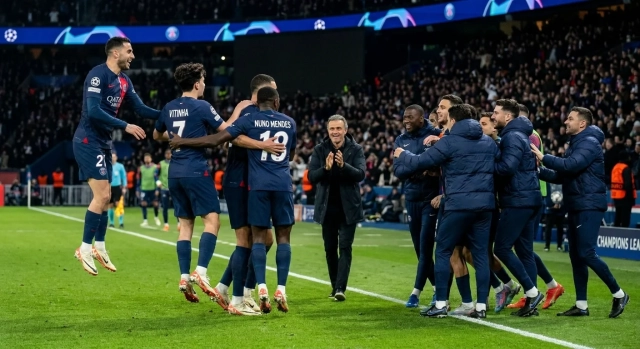
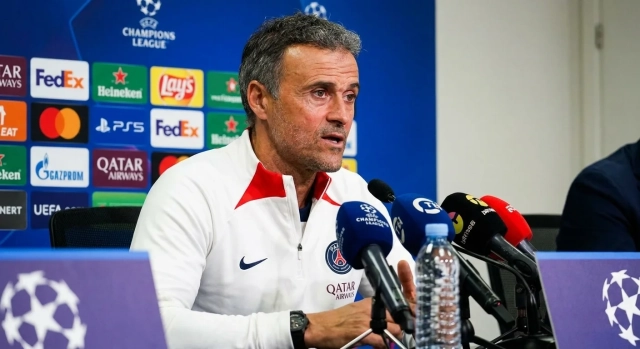
Luis Enrique turned PSG into back-to-back European champions without leaning on a single star
After Mbappé's departure, the Spanish coach built a team where the offensive spotlight is shared among several players.

There's a line that sounds almost prophetic today. When asked about Kylian Mbappé's departure for Real Madrid, Luis Enrique didn't hesitate for a second: PSG was going to get better. No doubt about it, he said. In the documentary "No tenéis ni idea," the Spanish coach went further and explained exactly why he was so sure.
Having a player who moved wherever he wanted meant there were parts of the game I didn't control. Next year I'm going to control all of them. All of them, no exceptions.Luis Enrique
Back in 2024, that sounded like a provocation. Mbappé had been the club's great offensive reference for years, the player who could win a match on his own. But Luis Enrique wasn't thinking about replacing him. He was thinking bigger: a team that wouldn't need to depend on anyone.
Two years later, the numbers back up that idea. PSG are back-to-back European champions, with the 2025 and 2026 Champions League titles, and they also added the European Super Cup, bringing their trophy count to 60 in club history, including the Intercontinental Cup. But the interesting part isn't just the haul. It's how they got there.
Shared spotlight, not a replacement
Instead of going out to find another Mbappé, the club spread the responsibility around. The fullbacks took on more offensive weight, the midfielders took charge of building play out of the back, and the forwards started pressing as the first line of defense. The result is a much less predictable team: shutting down one standout player no longer kills the danger, because another name always steps up.
Ousmane Dembélé is the clearest example. He didn't become "the new Mbappé": he developed his own game within the collective. In 2025 he had a massive season, with more than 30 goals, a Champions League title in hand, and finally, the Ballon d'Or. It's a curious paradox: Paris lost its superstar and ended up with another one anyway, without building the team around him.
Vitinha brings the other side of the coin: control. The Portuguese midfielder reads every situation in the match, speeds up, slows down, helps the team advance, all without needing to hog the ball. Achraf Hakimi, meanwhile, stopped being just a fullback with an engine and turned into an attacking piece that shifts position within a single play.
A second generation of leading men
Désiré Doué was one of the breakout stars of the 2025 title run: he scored two goals and added an assist in the final against Inter and took home the Golden Boy award. Then came Khvicha Kvaratskhelia to add even more unpredictability. In the 2025-26 Champions League, the Georgian scored 10 goals, Dembélé had 8, Vitinha 6 and Doué 5: no other team had that many players reaching double figures or close to it. The substitutes, meanwhile, chipped in 29 goals over the season, the highest mark among Europe's top five leagues.
With money to spare after a historic season, Luis Enrique once again avoided the marquee name. The most expensive signing was Ferran Torres, a World Cup winner with Spain but a bench player at Barcelona, joined by Maghnes Akliouche and Mika Godts, two young players of a similar profile brought in to cover the departures of Gonçalo Ramos and Kang-in Lee. The logic repeats itself: sign good players and let the system make them better.
So what's PSG's star? It's not a player anymore. It's the idea.