 MEX
MEX CHI
CHI JSS
JSS KHE
KHE JSK
JSK MCA
MCA COL
COL PMO
PMO HUN
HUN KOR
KOR FRA
FRA NED
NED NED
NED DEN
DEN KAZ
KAZ FRO
FRO EST
EST ISL
ISL SCO
SCO SVN
SVN SUI
SUI MKD
MKD MDA
MDA SVK
SVK LUX
LUX BUL
BUL ENG
ENG CZE
CZE CRO
CRO ESP
ESP BLR
BLR FIN
FIN ALB
ALB SMR
SMR KOR
KOR UZB
UZB CHN
CHN TJK
TJK IND
IND URU
URU RUS
RUS NGA
NGA ALG
ALG NIG
NIG JOR
JOR VEN
VEN ARG
ARG BEN
BEN COL
COL PER
PER USA
USA CAN
CAN CHI
CHI VAN
VAN SMN
SMN BAH
BAH MSR
MSR TCA
TCA VIN
VIN ATG
ATG ARU
ARU BLZ
BLZ ANG
ANG MWI
MWI SKE
SKE RTO
RTO RPO
RPO SAB
SAB AUR
AUR WXW
WXW SZD
SZD CCY
CCY YBL
YBLManchester City Found Guilty of More Than 100 Financial Rule Breaches by Premier League
An independent commission ruled that the club disguised more than 900 million pounds as commercial revenue even though the money came from its owner, while the club announced it will appeal the ruling.

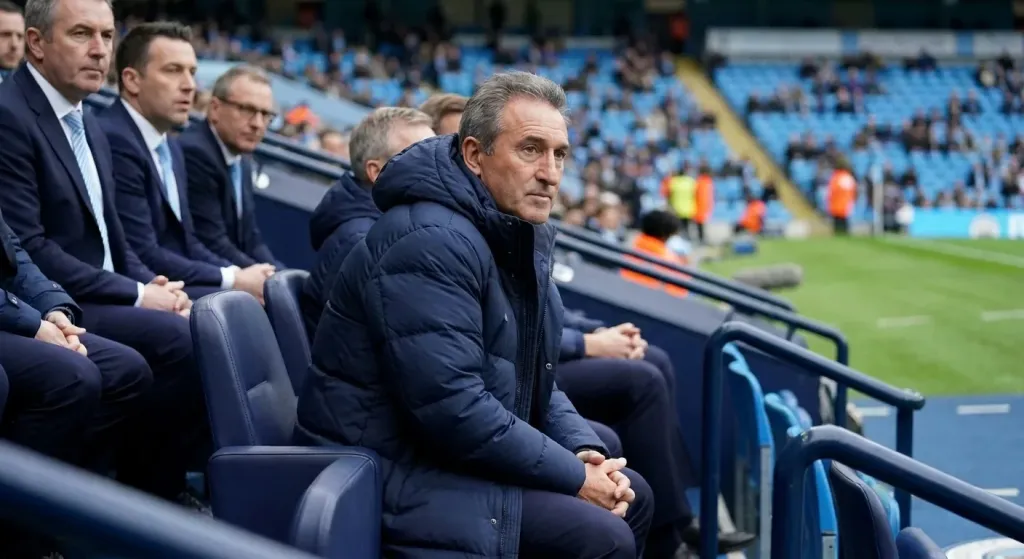
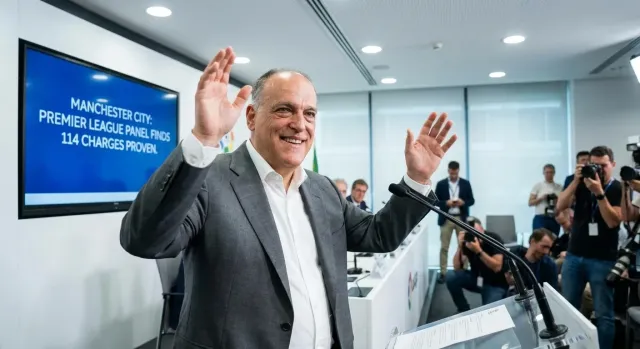
Nearly a decade of celebrated, admired, trophy winning soccer may turn out, at its core, to be one giant accounting lie. That is what an independent Premier League commission has just determined after years of investigation: Manchester City was found guilty of more than 100 breaches of the league's financial rules, committed between the 2009-10 and 2017-18 seasons.
The ruling does not mince words. It describes inflated revenue, disguised costs and sponsorship deals branded outright as a "sham" (the Premier League's own word). It also details image rights contracts with shell companies and payments that never showed up in official records. The upshot: the club managed to disguise more than £900 million ($1.18 billion) as legitimate commercial income, when in reality it came straight from the pocket of its owner, Abu Dhabi United Group (ADUG).
The most striking detail appears in the decision itself: between 2009-10 and 2017-18, City reported receiving £949.94 million ($1.254 billion) in commercial revenue from Abu Dhabi sponsors. Of that figure, only £119.25 million was actually put up by those sponsors. The rest came directly from ADUG. The club's defense was that, "from time to time," those sponsors would ask the Abu Dhabi government for financial help, which would then transfer them exactly the amount needed to meet their commitments to City. The commission did not buy it, calling the explanation something "conceived long after the events" to cover up what it termed the "Disguised Funding Arrangement."
The file also points to other maneuvers, including an additional consultancy contract for then manager Roberto Mancini with an Abu Dhabi club, which lowered his official City salary without cutting a cent of his real compensation. There is also the so called Fordham scheme, a company funded by ADUG and described in the document itself as "a facade" used to buy and exploit, at inflated prices, the image rights of City's own players.
The club's response
Chairman Khaldoon Al-Mubarak pushed back with a statement asserting that "our confidence and intention to prove the club's innocence is as strong as it was when this all began." Chief executive Ferran Soriano went further, calling the ruling a "Premier League conspiracy theory."
"A Premier League commission's opinion, which is adverse to our interests, has been made public. The Premier League's entire case against us rests on a single false accusation: that the owner's personal money was secretly funneled into the club through Abu Dhabi sponsors. This is simply not true."Ferran Soriano
Soriano insisted there is "irrefutable proof" (banks, transfers, witnesses) showing the money did not come from the owner, and pointed to the 2020 precedent, when City successfully overturned a two year ban imposed by UEFA on similar grounds before the Court of Arbitration for Sport (CAS).
The club has until this Friday to appeal, though no new evidence can be introduced in that process. In the meantime, the commission must set the penalties, which range from fines to relegation, along with the possible stripping of titles or a freeze on transfers. Everything suggests the appeals process could drag on well into 2027.
A city split between anger and uncertainty
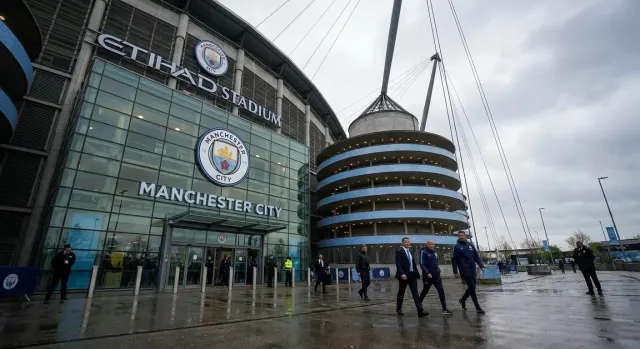
Ten miles from the Etihad, in Stockport, people were talking about something else on Saturday afternoon as the home side beat Peterborough United 1-0: Manchester City. In the stands, a group of home fans broke into a chant City's own supporters used to sing as a joke: "City are going down with a billion in the bank." It doesn't sound much like a joke anymore.
A day later, at a school in east Manchester, hundreds of kids gathered to play matches, and the conversations, among children as young as 8 and as old as 18, all circled back to the same question: what happens now to one of the city's biggest clubs. There were jokes about whether United should be handed the 2012 title, or whether Erling Haaland would end up playing in England's fourth tier. The Norwegian striker was actually pulled from a press conference with the Norway national team on Saturday over that very question, since there were no real answers to give.
Several clubs have already filed legal paperwork to reserve the right to seek compensation if City is handed a final sanction. It is not just about lost titles, but about revenue and a transfer market that, the argument goes, City helped inflate for years with its spending.
There is a line in the 40 page document that some are reading as a possible way out. Paragraph 70 states that "there was no evidence that [name redacted] authorized the transaction... and so it proceeded without his knowledge." No one knows for certain who that refers to, but the ambiguity has fueled speculation over whether there is room for some kind of settlement that avoids an endless legal battle.
Among City's own fans, opinion is split. Some are fully confident the club will be cleared, just as it was by CAS in 2020. Others, especially those who remember the years in the third tier between 1996 and 2002, view a possible punishment with less dread, having already lived through relegation and rebuilding. The younger ones, who have known nothing but trophies and finals, may feel it differently. What is certain is that, as the appeal moves forward, all of Manchester finds itself caught up in one of the biggest stories English soccer has produced in a long time.