 LTU
LTU AZE
AZE AUT
AUT KVX
KVX DEN
DEN WAL
WAL GIB
GIB AND
AND SRB
SRB NED
NED GER
GER GRE
GRE ISR
ISR IRL
IRL NOR
NOR POR
POR CHN
CHN NZL
NZL MLT
MLT LIE
LIE BOL
BOL PAR
PAR CLB
CLB MIA
MIA PUM
PUM ASL
ASL LEO
LEO FCJ
FCJ NCX
NCX CFA
CFA AUR
AUR MAR
MAR GUY
GUY CAY
CAY HAI
HAI CRC
CRC CUW
CUW NCA
NCA DMA
DMA PUR
PUR TRI
TRI DOM
DOM ALM
ALM NUE
NUE ATL
ATL AGR
AGR DEB
DEB FER
FER AND
AND MOR
MOR MIT
MIT STE
STE PAT
PAT SAM
SAM MAI
MAI TEM
TEM MID
MID TRI
TRI RCO
RCO GOD
GOD GTI
GTI ATR
ATR GJU
GJU SMT
SMT SBH
SBH ALT
ALT STU
STU FAK
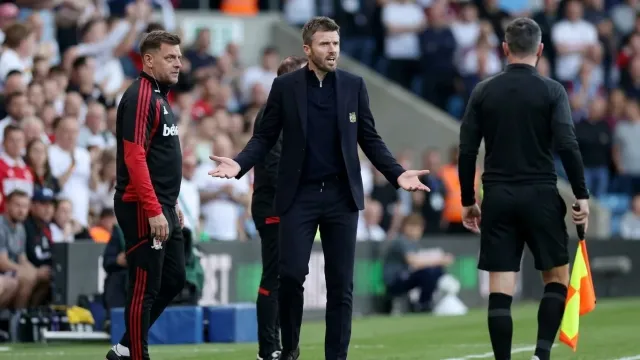
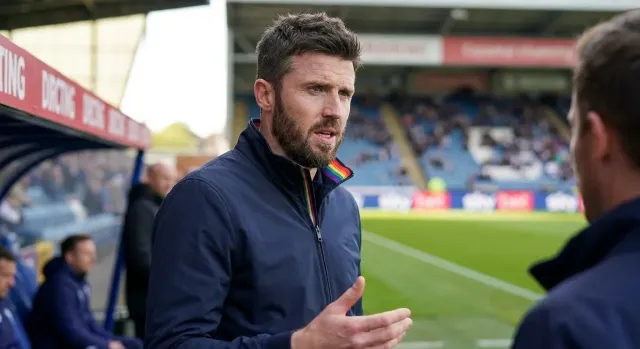
FAKMichael Carrick Takes Charge at Manchester United in Search of Structure After 13 Years Without a Premier League Title
The former midfielder arrives amid institutional renewal, with INEOS pushing for the club to function as a structure rather than depend on whoever happens to be manager.

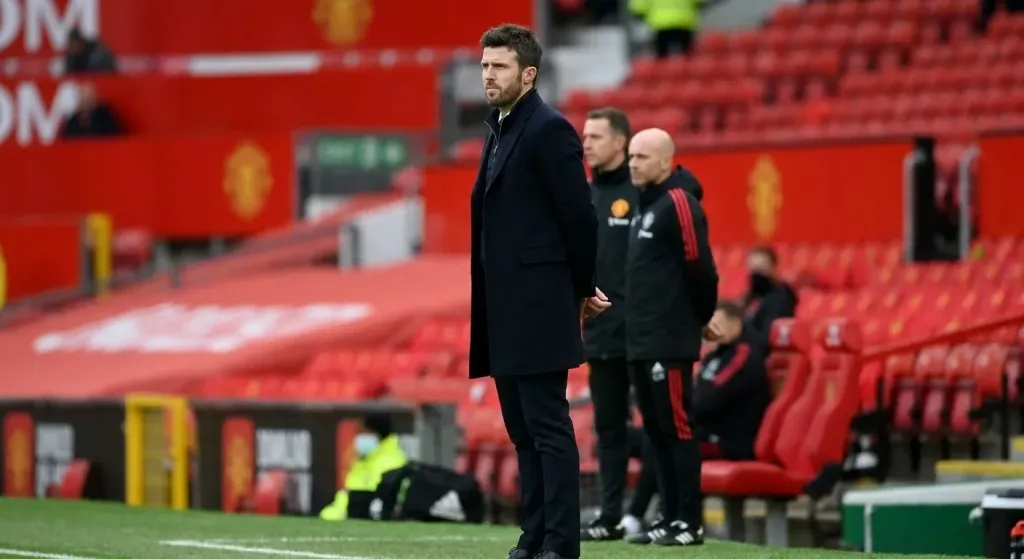
Thirteen years, eight managers and one Premier League title: zero. That, in essence, is the stat that sums up the decade and a half Manchester United has spent trying to answer a question that may have been the wrong one from the start. Ever since Sir Alex Ferguson retired in 2013 at age 71, the club has been searching nonstop for "his successor." And that search itself may have been the mistake.
Ferguson didn't just leave behind 13 Premier League titles and two Champions League trophies. He left a structure that knew how to renew itself: an academy plugged directly into the first team, a transfer policy that balanced big-money signings with homegrown talent, and a knack for reading a locker room that became known as man-management. That system carried the club through very different eras, the treble side of 1999, the Champions League winners of 2008, the last Premier League title in 2013, without ever losing its edge. Reproducing that turned out to be far harder than simply hiring a good coach.
David Moyes lasted less than a season. After him came Louis van Gaal, Jose Mourinho, Ole Gunnar Solskjaer, Ralf Rangnick, Erik ten Hag and Ruben Amorim, plus caretakers like Ryan Giggs, Ruud van Nistelrooy, Darren Fletcher and Michael Carrick. Not one of them made it three straight years in the job. The problem was never really the parade of names, it was the parade of projects, each with its own philosophy and none of them connected to the last.
The trap of chasing United's DNA
The club repeatedly turned to former players who knew Old Trafford inside out, as if proximity to the club's history could guarantee something. But knowing United's culture is not the same as knowing how to rebuild it. That may be the trap: nostalgia can bring back the symbols, but not the machinery behind them. In 2022, Rangnick summed up the situation with a blunt image: the club needed "open heart surgery." Years later, it's still up for debate whether that surgery actually happened, or whether it amounted to little more than a patch over a much deeper structural problem.
Meanwhile, the landscape around United shifted. Manchester City, bought by the Abu Dhabi United Group in 2008, brought in Pep Guardiola in 2016, the very manager who had knocked Ferguson's United out of two Champions League finals (Rome 2009 and Wembley 2011). United finished 15th in the 2024-25 Premier League, the club's worst finish in the competition's history, with no European football the following season.
INEOS, Carrick and a structure trying to stand on its own
The arrival of Sir Jim Ratcliffe and INEOS, holding a stake near 28% and control of football operations, opened a new chapter. Omar Berrada as CEO and Jason Wilcox as director of football are trying to move the club away from depending on whichever personality is in the dugout and toward operating as a proper structure, with clearly defined people in charge of recruitment and planning.
That's the backdrop against which Carrick arrived. He played 464 games for United between 2006 and 2018, won the 2008 Champions League and five Premier League titles under Ferguson. He took over the team in 2026 in a difficult spot and went 12 wins, three draws and two losses in 17 matches, a 76.5% points return that pulled the team back up to third place and into the Champions League. The club confirmed him with a contract through 2028.
Jose Mourinho recently revealed he could have been the one chosen to succeed Ferguson before he went on to manage Chelsea. His own stint at Old Trafford, back in 2016, didn't find the formula either. History suggests the problem was never simply about which name was on the door.
The club is also planning a new stadium with capacity for 100,000 fans next to the current Old Trafford, part of a broader urban regeneration plan. It's a literal way of building the future right next to the stage where Ferguson built his legacy.
Maybe the rebuild starts right there: the moment the club stops asking who the next Ferguson might be, and starts asking instead what kind of Manchester United it wants to be after him.