 COD
COD EQG
EQG MTN
MTN CTA
CTA LBY
LBY BOT
BOT AND
AND MLT
MLT ENG
ENG COL
COL CMR
CMR COM
COM CIV
CIV GHA
GHA SLE
SLE ZIM
ZIM TUN
TUN UGA
UGA PUR
PUR GUY
GUY DOM
DOM NCA
NCA CAY
CAY DMA
DMA HAI
HAI TRI
TRI CRC
CRC CUW
CUW OHI
OHI SCR
SCR EVE
EVE UCH
UCH CAE
CAE MUN
MUN ALE
ALE LPZ
LPZ MIN
MIN NED
NED GER
GER SRB
SRB GRE
GRE POR
POR WAL
WAL NOR
NOR DEN
DEN LIE
LIE LTU
LTU KVX
KVX IRL
IRL AUT
AUT ISR
ISR BEL
BEL SAN
SAN CHN
CHN VIE
VIE PRK
PRK CHI
CHI JPN
JPN URU
URU KOR
KOR ECU
ECU CHN
CHN MDV
MDV UZB
UZB IRN
IRN NAM
NAM CGO
CGOUSA's Early Under-20 World Cup Exit Has Emma Hayes Pointing to the Real Problem: A Missing Development Window from 17 to 21
After another round-of-16 exit at the Under-20 World Cup, the senior national team coach insists the issue isn't talent, it's a lack of playing time and cohesion among young players.

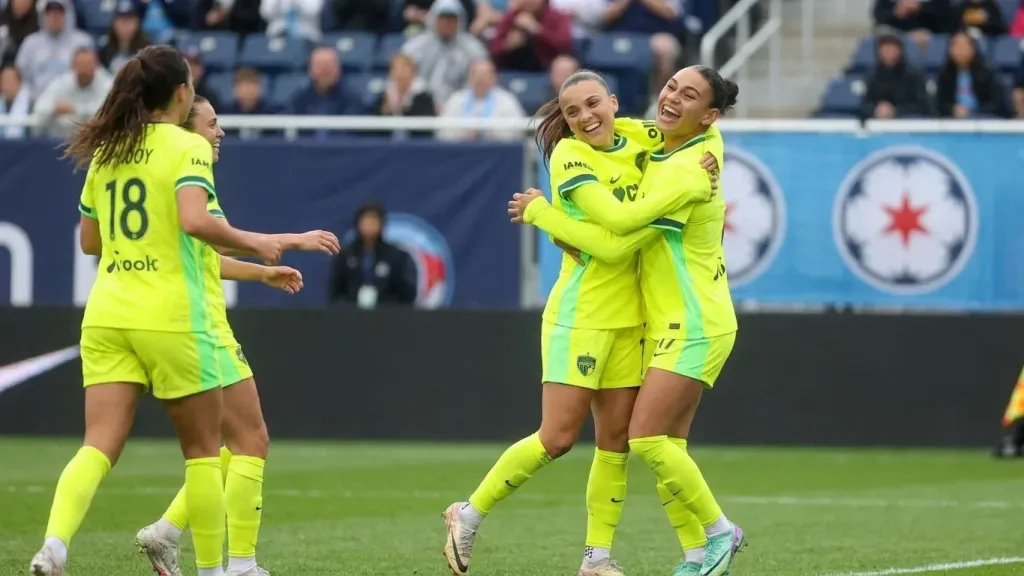
Fourteen years. That's how long it's been since the United States last won the Under-20 Women's World Cup title, and the latest round-of-16 exit brings back a question that's becoming impossible to dodge: what's going wrong with the development of young players in the country that invented global dominance in this sport?
The sense of crisis isn't new. It surfaced hard after the round-of-16 exit at the 2023 World Cup, when plenty of analysis pointed straight at a fractured youth system. Now, after the US Under-20 women's team fell in the round of 16 at its own age-group World Cup, those same voices are getting louder again.
Here's what's odd: talking about a "talent drought" in a country of more than 340 million people, with sky-high female participation in the sport, sounds almost contradictory. The problem isn't a shortage of players. The problem is something more like a series of clogs in a complicated pipeline, and fixing that entire system in a country this big and diverse is a massive task for the federation.
The Stretch That Worries Emma Hayes
The senior national team coach, Emma Hayes, is clear on this: the stretch that urgently needs fixing is players between the ages of 17 and 21.
"We need to get this 17 to 21 category right"Emma Hayes
Before the Under-20 World Cup, Hayes had already told ESPN she was "hugely concerned" about player development at that age. And the team, which was also missing several of its best players because their clubs wouldn't release them, responded with underwhelming performances, including a loss to Italy (now a semifinalist) in the opening match.
To grasp the contrast, just look back. The last time the United States won the Under-20 World Cup was in 2012, with Crystal Dunn and Julie Ertz (then Johnston) as the faces of a generation that later formed the heart of the senior team's 2015 and 2019 titles. Four years earlier, in 2008, the team coached by the late Tony DiCicco, featuring names like Alex Morgan, Sydney Leroux, Alyssa Naeher and Meghan Klingenberg, also won it all. Since then, aside from a third-place finish in 2024 that now looks more like the exception than the rule, early exits have kept repeating: group stage in 2018 and again in 2022. And at the Under-17 level, the story is even worse: the US has never won that World Cup and has twice failed to even qualify.
More Pros, But Not Always More Minutes
Something has changed drastically in recent years: there have never been so many professional teenage players as there are now. The last two Under-20 rosters each included eight professional players, a historic high. By contrast, the three teams that won the Under-20 World Cup were made up entirely of amateur players who were in college or headed there.
Names like Claire Hutton, Olivia Moultrie, Lily Yohannes, Gisele Thompson and her sister Alyssa Thompson reached the senior national team as teenagers after turning pro. Others, like Sophia Wilson and Trinity Rodman, left college early or skipped it altogether. That path didn't exist fourteen years ago: the first American to turn pro straight out of high school was Lindsey Heaps (then Horan), who left Colorado to sign with Paris Saint-Germain. The floodgates fully opened when Olivia Moultrie sued the NWSL in 2021 so she could sign with the Portland Thorns at just 15 years old. Since 2022, the league has had a special roster mechanism for signing players under 18.
But turning pro at 15 or 16 guarantees nothing if there isn't an environment that actually develops those players. That's one of the knots in this problem, and it's not exclusive to the national team, it's on the NWSL too. Rosters remain limited to just 22 to 26 players, there are no cup competitions to complement the demanding regular season, there's no centralized academy system, and the proposal for a second division, floated 18 months ago, hasn't gone anywhere concrete.
The result is that many young professionals get stuck in limbo, warming the bench. There are exceptions, of course: players like Hutton, Moultrie or Jaedyn Shaw have become genuine stars. Others, like San Diego Wave forward Melanie Barcenas, have taken longer to find their rhythm. Barcenas, who signed with the Wave at 15, is in her fourth season with the club and has racked up six goals and one assist this campaign. She was age-eligible for this Under-20 World Cup, but stayed with her club to fight for the playoffs, since the tournament falls outside FIFA dates and clubs weren't required to release her.
Those minutes in games that actually matter are exactly what a lot of young players aren't getting. Heaps repeats the same idea every time she's asked about the debate over turning pro young versus heading to Europe: the answer always depends on the player. NWSL, Europe, college, whatever, but with real games.
Bigger Rosters and a Direct Message
Hayes has been blunt with young players, including at the January camp for rising stars that brought together the top Under-23 talent: play, wherever that is.
"I don't care where they're playing, but they have to be playing"Emma Hayes
The coach has also called for a stronger loan system between the NWSL and the USL Super League, the country's other top-flight women's league, and acknowledges that playing regularly for a good college team can still beat riding a pro bench.
"Young players have to make the decision to go to places where they're going to play and play as starters. If you go to Norway, Germany, Spain or England, they play from a younger age there. That's just a fact. Of course, entering a professional environment is a fantastic situation, but not if you're going to be sitting on the bench for two or three years. Honestly, I'd rather they went to college and played"Emma Hayes
Thanks to financial backing from the federation, Hayes has scheduled more camps and matches for the Under-23 age group than any coach before her. But there's something beyond numbers and minutes: the connection between players on the field. That, according to Hayes, is the real difference between the United States and national teams like Japan or Spain, it's not a matter of individual technique, it's cohesion.
At the Under-20 World Cup the results were poor, but what was missing most was exactly that. In the 2-2 draw against Japan in the group stage, the best moments came from brilliant individual plays, and the defensive breakdowns in that same match and in the 2-1 loss to Italy also showed plenty of collective disconnection. These are the same criticisms leveled at the senior team during the 2023 World Cup. Hayes and a new generation of players have worked to change that identity, but without real improvements in development between the ages of 17 and 23, early exits could keep repeating themselves, including at the top, with the senior national team.