 NAL
NAL CAR
CAR COL
COL AUD
AUD CNA
CNA SPA
SPA HFD
HFD LOU
LOU LDN
LDN ATL
ATL MTY
MTY CTJ
CTJ ATS
ATS BRB
BRB LCA
LCA SKN
SKN JAM
JAM GUA
GUA HON
HON SUR
SUR SLV
SLV MTQ
MTQ CAV
CAV SUP
SUP UMA
UMA ISF
ISF UAT
UAT KHA
KHA ELP
ELP TUL
TUL GEO
GEO NIR
NIR ARM
ARM LVA
LVA HUN
HUN UKR
UKR ITA
ITA BEL
BEL MNE
MNE CYP
CYP POL
POL BIH
BIH SWE
SWE ROU
ROU TUR
TUR FRA
FRA AUS
AUS BRA
BRA IND
IND PAN
PAN BER
BER GLP
GLP GRN
GRN CUB
CUB MOZ
MOZ SEN
SEN SDN
SDN ETH
ETH TAN
TAN GNB
GNB NIG
NIG LES
LES NGA
NGA MAD
MAD RWA
RWA LBR
LBR TOG
TOG BDI
BDI MWI
MWI SSD
SSD GAM
GAM SOM
SOM ALG
ALG ZAM
ZAM MAR
MAR GAB
GABWirtz isn't the player he was in Germany, but the numbers explain why Liverpool isn't giving up on him
The club's most expensive signing touches the ball less and creates fewer assists than he did at Leverkusen, but his advanced metrics remain among the best in the Premier League.

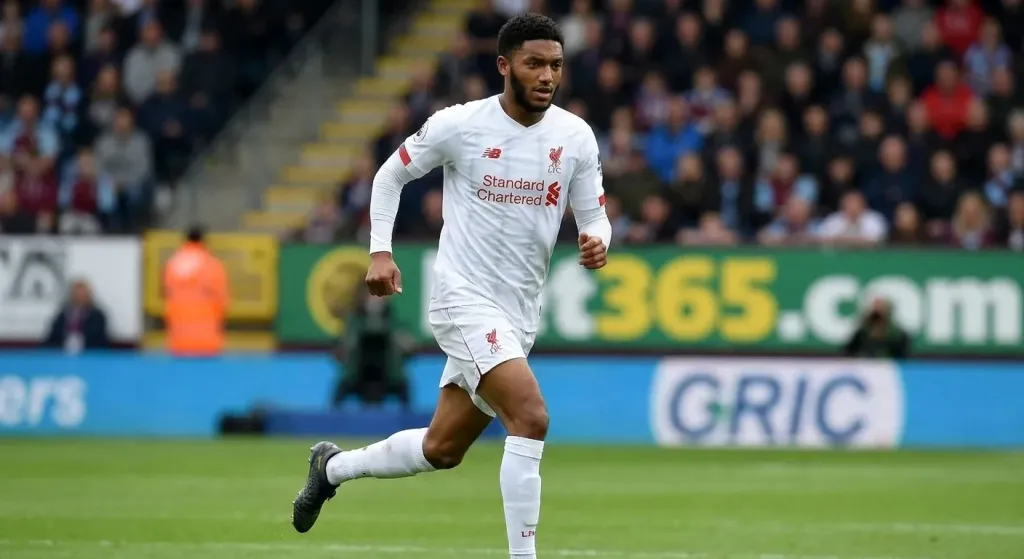
Five goals and three assists since he arrived. Since then, just one assist so far this season. With those numbers on the table, it's easy to understand why half of Liverpool's fan base already has doubts about Florian Wirtz, the most expensive signing in the club's history. But the full numbers, the ones that go beyond the scoreline, tell a different story.
Before crossing the Channel, Wirtz was the guy every opposing manager feared. Hansi Flick and Xabi Alonso talked about him as if he belonged to a different category altogether: someone who could break lines with a pass, dribble past a center back and finish the move himself if needed. That "do it all" profile was exactly what convinced Liverpool to pay 117.5 million euros (about $133 million) last summer, a club record for a player who hadn't even played in the Premier League yet.
And it wasn't a whim. Between 2010 and today, across Europe's five major leagues, only five players managed to sustain an extremely high level of involvement (lots of touches, a strong pass completion rate, shots and chances created, passes into the box and dribbles) at the same time, over multiple seasons. That list is topped by Lionel Messi, and it also includes Lamine Yamal, Eden Hazard, Michael Olise, and Wirtz, who pulled it off twice before turning 22 while wearing the Bayer Leverkusen jersey, a club with a budget similar to Crystal Palace's.
What really changed in the Premier League?
The first thing that jumps out is that Wirtz is still meeting almost all of those demanding benchmarks in England. Almost. Because everything dipped a little: fewer shots, fewer chances created, fewer passes into the box, fewer dribbles attempted. The biggest drop, though, comes down to something simpler: he's touching the ball almost 20 times less per game than he did in his last two Bundesliga campaigns.
That single stat explains a lot of the rest. If you touch the ball less, it stands to reason you'll shoot less, create less and dribble less. His touch map at Liverpool shows exactly that: in the attacking third, he's gone from 50 touches per game at Leverkusen to just 35 in the Premier League. And most notably, he's all but disappeared from the middle of that zone.
Coaches call it "zone 14," the space just in front of the opposing box where most goalscoring plays originate. Wirtz has kept showing up in the same lane, the left half-space, but far less often in that central strip: 19 touches per 90 minutes in Germany compared to 14 in England.
That's probably the key to his decline as a playmaker. In his last two seasons in Germany he produced 0.37 expected assists (xA) per 90 minutes, a number that tied him for best in the entire Bundesliga among players with at least 3,000 minutes. In England that figure has collapsed to 0.18, barely 18th among players with 2,000 minutes or more.
The odd part is that his finishing touch is still there: in Germany he generated 0.29 expected goals per shot and scored 18 goals on 15 xG; in England that number has dipped slightly to 0.25, and even though he only has five goals, he's already racked up 7.7 xG. The problem isn't the quality of his shooting, it's that the chances for everyone else simply aren't arriving the same way.
The numbers that still back his value
Not being the same kind of chance creator doesn't mean he's a weak player. Since the start of last season, only seven Premier League players with more than 2,000 minutes attempt and create at least two shots per 90 minutes, and Wirtz is one of them, alongside names like Bukayo Saka, Phil Foden and Bruno Fernandes. Only six players touch the ball more inside the box than he does, and only ten complete more dribbles.
He also remains a specialist at finding pockets between the lines: he receives 33 line-breaking passes, the third-best mark in the entire league, well above any of his teammates (Liverpool's next best is just 18). Advanced ratings from the Futi platform, which measure a player's overall impact on the scoreline for and against on a 0-to-100 scale where 50 is average, gave him 60 points last season, seventh among Premier League attacking midfielders. This season he's sitting at exactly the same 60.
Nobody pays a record transfer fee for the seventh-best attacker in a league, that much is clear. But you don't pay that kind of money thinking about a single season either, you pay it thinking about the years of footballing maturity still to come. Wirtz was 22 last season and is 23 now; statistically, his best version shouldn't even be expected before next year.
There's precedent that calls for patience. Martin Odegaard was a solid but unspectacular player in his first two seasons at Arsenal, without many goals or assists, until his third season, when he broke out and made the Premier League's team of the year. Bruno Fernandes, now one of the best attacking midfielders in the league, didn't leave Portugal until he was 25.
You also have to factor in Liverpool's own context: a team in the middle of a transition, with a new manager, a squad unevenly split between young players, players in their prime and players in decline, and a club that, by its own moves, isn't built to win everything right now but rather in a couple of years' time.
Wirtz may never again produce that perfect version of himself he showed at Leverkusen, where he found a kind of space and time on the ball that may not be replicated in England. But the reason Liverpool hasn't given up on him is simple: what he did in Germany, sustained over several seasons, was only achieved by a handful of players in more than a decade. That ability doesn't just vanish overnight because he changed leagues.