 ASC
 NEJ
 AHA
 ANS
 ARA
 FKQ
 IKS
 EB
 ADA
 KFK
 DYN
 KUD
 PZH
 OBO
 IPS
 NFO
 ALA
 MAL
 NCX
 FCJ
 ATL
 ASL
 VFB
 BMG
 TOR
 MON
 BRS
 NIC
 FAI
 NSR
 ITH
 DRA
 AHL
 KHA
 QAD
 HIL
 IST
 HFD
 ITT
 PAR
 GOA
 QAD
 MCO
 CSC
 NEW
 MAC
 WSW
 AKL
 ALT
 FAK
 STU
 LAS
 ZIR
 SUM
 ANF
 LIK
 DEN
 KVK
 KVM
 ZRI
 RAD
 C48
 BOT
 MOR
 OTR
 AUD
 HUA
 IQU
 MAG
 RFC
 BIF
 ALM
 RJC
Ballon d'Or: why the numbers point to Kane, not Yamal, as the favorite
A look at the Teams of the Month, the World Cup and advanced metrics builds a case that puts Kane ahead of Yamal, Mbappe and Haaland.

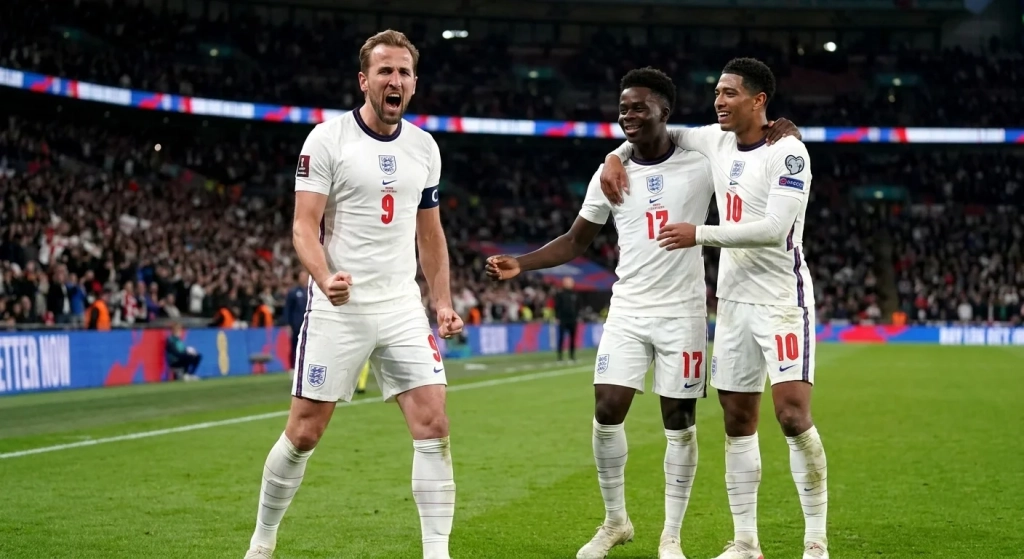
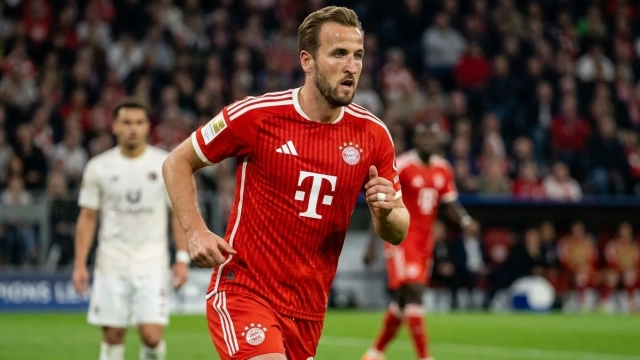
The ceremony is just hours away, and if the bookmakers are to be believed, the real race comes down to two names: Harry Kane sits at roughly two-thirds odds to win the Ballon d'Or, while Lamine Yamal is around 28 percent. What's left is split between Kylian Mbappe and Lionel Messi. Everyone else, it seems, is just making up the numbers.
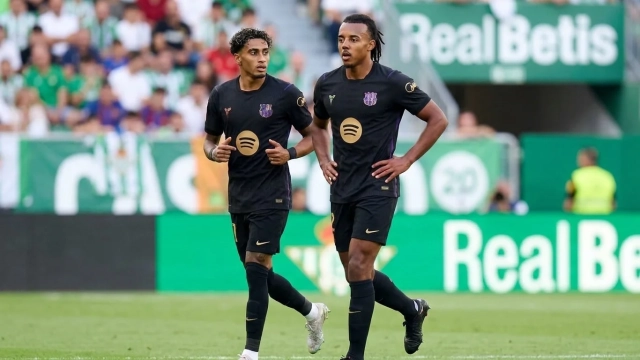
And yes, it's a strange award at times. Just look at how the odds shifted: Messi was the favorite before the World Cup final, and Kane became the favorite right after that same final, even though Kane didn't even play in it. Put another way, if Yamal had converted any of his four shots in that final (more than any other player on the field), he would probably be the runaway favorite right now. Since none of them went in, that alone seems to be enough to cast doubt on whether he's really the best player in the world.
The Ballon d'Or's own rules contradict themselves a bit. Article 2 states that the award recognizes the best player "regardless of league or nationality." But Article 4 lists the criteria, in order of importance, as individual performance, team performance and titles, and fair play. In other words: your team shouldn't matter, but playing for a winning team matters a great deal. With that built-in contradiction, pretty much any argument can be made to work.
What the full-season data says
For a more objective picture, it helps to look at the Teams of the Month compiled by the European sports press, a ranking that has existed since 1995. There, Kane led the season with 8 appearances, followed by David Raya with 7, and a trio of Gabriel Magalhaes, Declan Rice and Michael Olise with 6 each. Mbappe had 5, and Haaland and Achraf Hakimi had 4.
It's striking that Yamal barely cracked two Teams of the Month, fewer than players like Joshua Kimmich or William Saliba. At the World Cup, looking at man-of-the-match awards, Messi led with 5, Jude Bellingham had 4, and Mbappe, Haaland and Vinicius each had 3. Kane and Yamal had 2 apiece.
Looking at goals plus assists across the top five leagues, the Champions League and the World Cup combined, there's a clear top two, though that number doesn't tell the whole story: not every assist and not every goal carries the same weight. Adjusting for pass quality and discounting converted penalties, Kane and Mbappe end up nearly tied, with Olise and Haaland closing the gap behind them. Using a finer metric, possession value (which measures how much each touch of the ball contributes to a team's scoring chances), the same top two holds: Kane and Mbappe, followed by Olise and Haaland a step below, and further back Vinicius, Yamal and Luis Diaz.
The personal ballot
Cross-referencing all of this data, a clear group of candidates emerges: Kane, Mbappe, Haaland and Olise, exactly the four attackers with the most Team of the Month appearances. Raya has been extraordinary, but he's been backed by the best defense in a long time. Rice is the best midfielder in the world, though not quite good enough to leapfrog a star forward, and he also had a quiet World Cup. Magalhaes wouldn't even be the best center back on his own team (that honor belongs to Saliba), and Hakimi, while the best fullback on the planet, didn't match last season's level.
Adjusting for league difficulty, Mbappe turned in the best season of all by a considerable margin: LaLiga, the Champions League and the World Cup all factored in, with a possession contribution that neither Kane nor Haaland can match. Olise, for his part, led all players in possession value, rarely giving away the ball and pressing with real intensity, something Mbappe barely does anymore. The only thing holding Olise back is that he didn't score at the World Cup, despite being France's second-highest in expected goals: he had enough shots for four goals, and if just one had gone in, he'd be at the top of this list without question.
There's also a case to be made for Khvicha Kvaratskhelia, second only to Mbappe in Champions League attacking output, hurt by limited league minutes at PSG and by representing a country that didn't qualify for the World Cup.
In the end, the pick leans toward a player who combines scoring, defensive work rate and involvement in build-up play: he was decisive in the league, in the Champions League and at the World Cup, and even though he plays for a dominant team in a less competitive league, it was his team that knocked out Real Madrid in the quarterfinals and nearly eliminated PSG in the semifinals.
The final ballot, then, reads as follows: 1) Harry Kane (Bayern Munich), 2) Michael Olise (Bayern Munich), 3) Lamine Yamal (Barcelona), 4) Kylian Mbappe (Real Madrid), 5) Erling Haaland (Manchester City), and rounding out the top 10, Declan Rice, Kvaratskhelia, Gabriel Magalhaes, Messi and Julian Alvarez.