 ATH
 RSO
 VAN
 SEA
 JUV
 NAP
 MAR
 TOU
 ATO
 FOR
 PAL
 VAS
 THS
 GUV
 CCP
 OLI
 CAG
 UNI
 LEX
 COS
 BRA
 FAM
 ATL
 TOR
 NSH
 RBNY
 NE
 MIA
 LAF
 MIN
 POR
 HOU
 CSL
 NCX
 CAZ
 LEO
 RFA
 FSC
 SMT
 COL
 GTI
 QAC
 VAR
 MOR
 SUP
 CAV
 ISF
 ONC
 GRE
 ATL
 ATL
 ALI
 AGU
 FAS
 ANT
 MUN
 GUA
 COB
 COM
 MIX
 MOT
 MAR
 OLA
 GUA
 BOL
 FCU
 CAR
 LA
 BOS
 BAY
 SD
 GFC
 UTA
 HOU
 POR
Boca lost its identity before it lost the match: fell 1-0 to Vasco da Gama in the Sudamericana
Without Paredes and with a disjointed midfield, Arruabarrena's side now needs to win by two goals in the second leg to reach the final.

Losing a match is one thing. Losing your identity is something else entirely. That's what happened to Boca at La Bombonera, where the club fell 1-0 to Vasco da Gama in the first leg of the 2026 Copa Sudamericana semifinals. The result stings, but what's truly worrying is how it came about: a team that looked rushed, imprecise and stripped of the ball control that had been its trademark under Rodolfo Arruabarrena in this second stint as coach.
Through the first half, Boca seemed more concerned with the result than with how to build toward it. That urgency showed up as constant misplaced passes, trouble advancing with the ball, and an opening 45 minutes in which the team never dictated terms. What stands out is that ball circulation and movement had been precisely the strengths holding up Arruabarrena's approach until this game. Against Vasco, they barely showed up: Boca lost the midfield battle and ended up leaning on isolated plays to get anywhere near the opposing goal.
The absences that changed everything
One name explains much of the problem: Leandro Paredes. The captain's injury wasn't just a blow to morale, it also exposed just how much the team depends on its main playmaker to organize the buildup and bring clarity to the circulation. On top of that loss, Boca was also missing Alan Velasco and Tomas Belmonte, further narrowing Arruabarrena's options for putting together a midfield.
The coach will have to decide which changes can restore his team's control of the ball, and figure out whether Paredes will be fit for the return leg, something that will depend purely on his physical recovery. But the real challenge isn't just getting a starter back, it's finding a structure that holds up even when a key piece is missing.
The balance still missing
Vasco knew how to control the ball and exploit the flanks whenever it broke through the first wave of pressure, and that's where much of its advantage came from. For the return leg, Boca will need to tighten its pressure on the ball carrier, close down the interior spaces and better coordinate its cover so it doesn't keep getting exposed in one-on-ones. Adding attacking players might be tempting in the chase for a result, but it can't come at the cost of leaving the flanks unprotected or opening huge gaps between the lines.
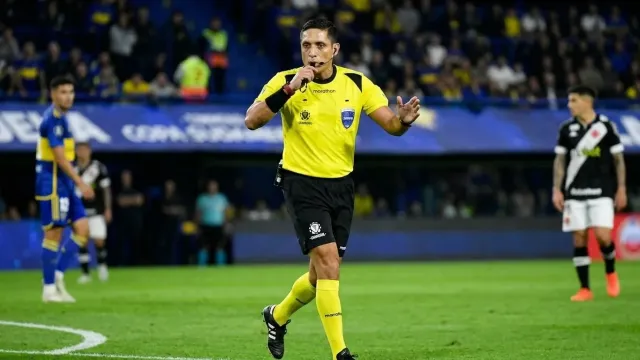
There was, to be fair, a response in the second half, with Vasco down a man: Boca pushed into the opposing half and created chances, though a lack of sharpness kept it from finding the equalizer. That frustration now needs to turn into a footballing answer, with more precision in the final third and better judgment on when to push and when to hold onto the ball.
The margin is razor thin: Boca needs to win by two goals to advance straight to the final, because a one-goal victory would send things to penalties. That forces Arruabarrena to prepare a match where the attacking push coexists with order over the full 90 minutes, without the need to score throwing the team out of shape again.
For the coach, this series also carries echoes of the past. In 2014 he was eliminated by River in the Sudamericana semifinals, and in 2015 he fell to the same rival again, this time in the round of 16 of the Libertadores. Now he has a chance to show he learned from those nights. Boca can still reach the final, but it will need to show a very different version of itself than the one seen at La Bombonera, with clear ideas even in a match that will force it to take risks.