 NAL
NAL CAR
CAR COL
COL AUD
AUD CNA
CNA SPA
SPA HFD
HFD LOU
LOU LDN
LDN ATL
ATL MTY
MTY CTJ
CTJ ATS
ATS BRB
BRB LCA
LCA SKN
SKN JAM
JAM GUA
GUA HON
HON SUR
SUR SLV
SLV MTQ
MTQ CAV
CAV SUP
SUP UMA
UMA ISF
ISF UAT
UAT KHA
KHA ELP
ELP TUL
TUL GEO
GEO NIR
NIR ARM
ARM LVA
LVA HUN
HUN UKR
UKR ITA
ITA BEL
BEL MNE
MNE CYP
CYP POL
POL BIH
BIH SWE
SWE ROU
ROU TUR
TUR FRA
FRA AUS
AUS BRA
BRA IND
IND PAN
PAN BER
BER GLP
GLP GRN
GRN CUB
CUB MOZ
MOZ SEN
SEN SDN
SDN ETH
ETH TAN
TAN GNB
GNB NIG
NIG LES
LES NGA
NGA MAD
MAD RWA
RWA LBR
LBR TOG
TOG BDI
BDI MWI
MWI SSD
SSD GAM
GAM SOM
SOM ALG
ALG ZAM
ZAM MAR
MAR GAB
GABItaly Bets on Sons of African Immigrants to Rebuild the Azzurri
After missing the last two World Cups, Mancini calls up young talents like Kouadio, Kayode and Inacio in a 34-man roster aimed at relaunching the Italian national team.

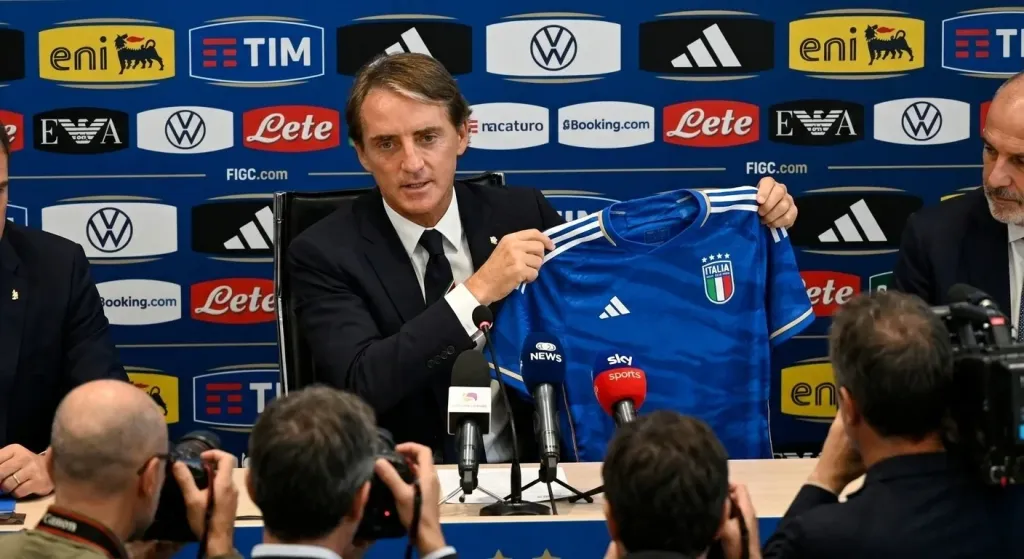
There's an image that sums up Italy's current situation better than any statistic: the Azzurri, the team that won four World Cups and gave us eternal postcards like Marco Tardelli's scream in the 1982 final, can't even qualify for the tournament these days. North Macedonia and Bosnia, second or third tier rivals in any other context, ended up being the executioners who knocked Italy out in the last two editions. And it's not just a results problem: Italy also lost the identity that once made it recognizable, for better or worse, on any field in the world.
That's why the federation decided not to wait any longer. The strategy is clear: fully tap into a soccer landscape that's growing more multicultural by the day, something other European national teams have already been doing. The curious part is that Italy walked a similar path almost a century ago, when it brought in a wave of "oriundi," sons of immigrants who had crossed the ocean fleeing poverty. That move earned Italy the crown at the 1934 World Cup, played on home soil, with Argentines Jose Luis Monti, Raimundo Orsi, Enrique Guaita and Atilio Demaria as key pieces.
Today the landscape looks different: a different game, a different Italy, a different world, with migration flows now coming mainly from Africa. The Azzurri are looking to catch that train before it's too late.
A Broad Roster With Nods to the Past
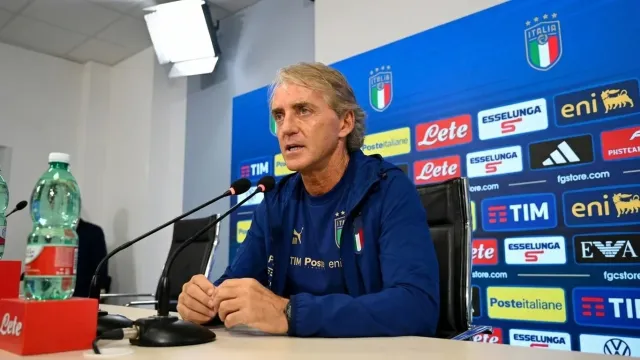
Roberto Mancini didn't go as far as Jurgen Klopp did in Germany, who called up as many as 44 players for his first Nations League squad, but he still opted for an expansive list: 34 players with a youthful stamp, though not abandoning familiar names like Gigi Donnarumma (Manchester City), Alessandro Bastoni (Inter), Riccardo Calafiori (Arsenal), Nicolo Barella (Inter) and Giacomo Raspadori (Atalanta).
Mancini himself was quick to tamp down expectations of an overnight revolution. At the Gran Gala del Calcio, he didn't mince words:
We can't suddenly throw a lot of young players onto the field. They need help. Young players have talent, but there has to be someone out there to guide them.Roberto Mancini
That's the real challenge here: Italy understands it needs to rebuild, but it still has to find the right pace to do it without the tifosi, always passionate and with their minds fixed on past glories, starting to pile on the pressure at the first stumble.
The New Faces of the Azzurri
Among the emerging names, Eddy Kouadio, 20, stands as one of the symbols of this new era. Born in Prato to Ivorian parents and a veteran of Italy's youth national teams, Mancini wants to lock him down before he decides to play for Ivory Coast instead. He'll get his shot to debut during the upcoming FIFA window built around the Nations League: September 25 against Belgium, the 28th in Turkey, October 2 against France in Saint-Denis and the 5th in the return match against the Turks at home.
Something similar is happening with Michael Kayode, a Brentford fullback born to Nigerian parents who has already scored a goal this Premier League season against Tottenham, and with Samuele Inacio, 18, of Borussia Dortmund, son of former Brazilian pro Inacio Pia, whom Brazil had also tried to recruit. Mancini also convinced Alessandro Romano, 20 and born in Winterthur, to leave his time in Switzerland's youth ranks behind and play for his parents' home country instead. The midfielder, on loan at Cagliari, has already shown he can find the back of the net, scoring the goal that gave his team a 1-0 win in Parma.
Also on the list is Massimo Pessina, an 18-year-old goalkeeper who just made his debut at Bologna. Other prospects like Alphadjo Cisse (Milan), Mathis Mout (Monza) and Seydou Fini (Frosinone) remain with the Under-21s for now, still developing before their next step up.
Mancini, Facing the Mirror Again
Mancini's name is tied to Italy's last major triumph: Euro 2021, won on penalties against England at Wembley. That cycle came to an end in 2023 following the absence from Qatar, and now the coach returns with a shot at redemption. Here's how he described what he felt when he left the job:
I deeply regretted my departure because for me, the national team jersey was always hugely important. Losing it was like when a man in love loses the woman of his life.Roberto Mancini
He'll have the backing of Claudio Ranieri's experience, now serving as technical director of the Italian federation, and the support of the entire Italian soccer world, at least as long as the results don't say otherwise.
Italy already knows what it's like to hit bottom and climb back up. It happened after the Superga air disaster in 1949, which wiped out the best players of that generation. It happened after the Totonero betting scandal in 1980, which even sidelined a young Paolo Rossi for two years, the very same player who would go on to become top scorer and symbolic captain of Italy's third World Cup title two years later. Without the old Catenaccio, long since overtaken by tactical evolution, but with the same old cunning, the Azzurri are giving it another go with fresh faces. The soccer world is waiting for them. And even if it won't say so out loud, it misses them.