 CTJ
CTJ ATS
ATS SLV
SLV MTQ
MTQ KHA
KHA POL
POL GEO
GEO NIR
NIR ARM
ARM LVA
LVA HUN
HUN UKR
UKR ITA
ITA BEL
BEL MNE
MNE CYP
CYP POL
POL BIH
BIH SWE
SWE ROU
ROU TUR
TUR FRA
FRA AUS
AUS BRA
BRA IND
IND PAN
PAN ATL
ATL MTY
MTY BER
BER GLP
GLP GRN
GRN CUB
CUB BRB
BRB LCA
LCA SKN
SKN JAM
JAM GUA
GUA HON
HON SUR
SUR MOZ
MOZ SEN
SEN SDN
SDN ETH
ETH TAN
TAN GNB
GNB NIG
NIG LES
LES NGA
NGA MAD
MAD RWA
RWA LBR
LBR TOG
TOG BDI
BDI MWI
MWI SSD
SSD GAM
GAM SOM
SOM ALG
ALG ZAM
ZAM MAR
MAR GAB
GAB MLI
MLI CPV
CPV EGY
EGY ANG
ANG BFA
BFA BEN
BEN SAB
SAB RPO
RPO AUR
AUR NAL
NAL CAR
CAR CAV
CAV SUP
SUP WXW
WXW GXH
GXHBerrada explains why Manchester United spent less than rivals despite mounting losses
CEO Omar Berrada defends the club's financial discipline as a deliberate strategy, even amid record revenue and growing debt.

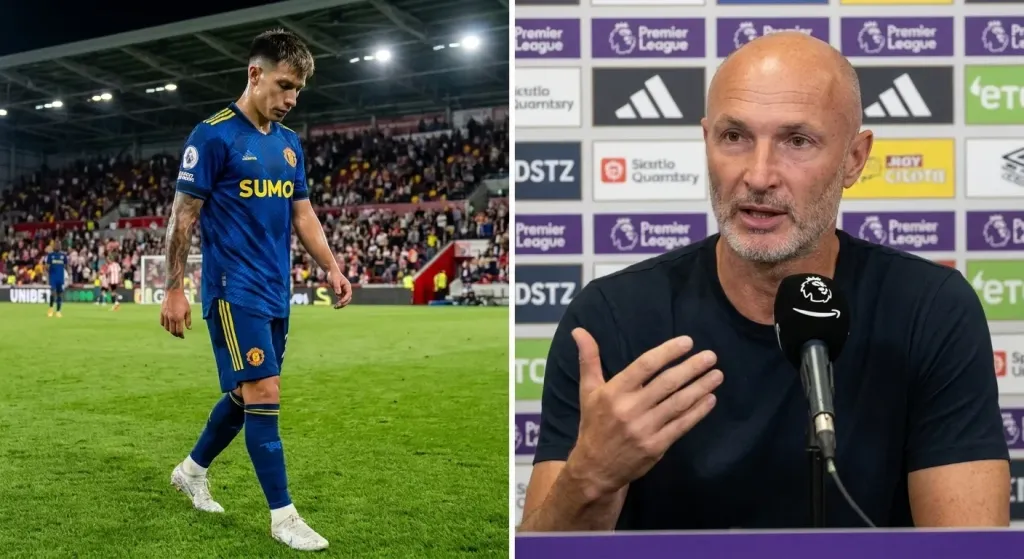
The numbers are in the red, but the message from Old Trafford is clear: Manchester United no longer spends the way it used to, and that's a decision, not a coincidence. That's the picture painted by CEO Omar Berrada, who explained that the club's transfer strategy during the past summer window was built around "financial sustainability," at a moment when the club has just reported further losses.
On Wednesday, United published its full-year financial results, and the contrast was stark: on one hand, record revenue of £677.6 million ($900 million) and an operating profit of £22.6 million ($30 million). On the other, a total loss of £43 million ($57 million), up from £33 million ($44 million) the previous year. Debt hasn't let up either, rising £95 million ($126 million) to a total of £583 million ($773 million).
And on the transfer market? That's where the shift in philosophy really shows. United spent £155 million ($206 million) on midfielders Andrey Santos, Youri Tielemans and Carlos Baleba. That figure falls short compared to what their so-called "big six" rivals did: Manchester City, Liverpool, Arsenal, Tottenham and Chelsea all spent considerably more, and in fact City, Liverpool, Tottenham and Chelsea each paid at least £100 million ($133 million) for a single player.
Berrada was direct when discussing that spending discipline:
"While these results confirm that we are on the right track, we will continue to maintain a disciplined approach to ensure our finances remain sustainable. With that financial sustainability in mind, we have strengthened both our men's and women's teams during the summer window, and our men's team has seen the return of Champions League football to Old Trafford."Omar Berrada
In the statement accompanying the figures, the club was just as explicit, saying it "continues on its path to improve operational efficiency and financial sustainability." A source at United was even more direct about what that process involves, noting that "stabilizing the business has required, and will continue to require, hard work and financial discipline."
The cost of changes on the bench
Among the year's expenses is a chapter tied to the dugout. The club paid £8.2 million ($11 million) to Ruben Amorim and his coaching staff following his departure in January. Interestingly, United ended up saving around £8.5 million ($11.3 million) after the Portuguese coach accepted an offer to manage AC Milan over the summer.
Additionally, between March and June, the club canceled roughly £150 million ($199 million) of a revolving credit facility, another move pointing in the same direction: getting the books in order.
But it wasn't all cutbacks. The club's finances also revealed a payment of £63.5 million ($84 million) for land tied to the new stadium project. On that plan, Berrada was upbeat: "Our other major area of focus is our plan to develop a new stadium with a capacity of 100,000 spectators. We have already hit the milestone of securing the land that will form part of the proposed site for the new stadium," he explained.