 ATH
 RSO
 VAN
 SEA
 JUV
 NAP
 MAR
 TOU
 ATO
 FOR
 PAL
 VAS
 THS
 GUV
 CCP
 OLI
 CAG
 UNI
 LEX
 COS
 BRA
 FAM
 ATL
 TOR
 NSH
 RBNY
 NE
 MIA
 LAF
 MIN
 POR
 HOU
 CSL
 NCX
 CAZ
 LEO
 RFA
 FSC
 SMT
 COL
 GTI
 QAC
 VAR
 MOR
 SUP
 CAV
 ISF
 ONC
 GRE
 ATL
 ATL
 ALI
 AGU
 FAS
 ANT
 MUN
 GUA
 COB
 COM
 MIX
 MOT
 MAR
 OLA
 GUA
 BOL
 FCU
 CAR
 LA
 BOS
 BAY
 SD
 GFC
 UTA
 HOU
 POR
Estudiantes Brings a Perfect Record Against Brazilian Clubs in Finals into Copa Libertadores Showdown with Palmeiras
El Pincha won both of its Copa Libertadores finals against Brazilian opponents, one of them against this very Palmeiras side back in 1968, and on November 28 the two teams meet again at the same Centenario in Montevideo.

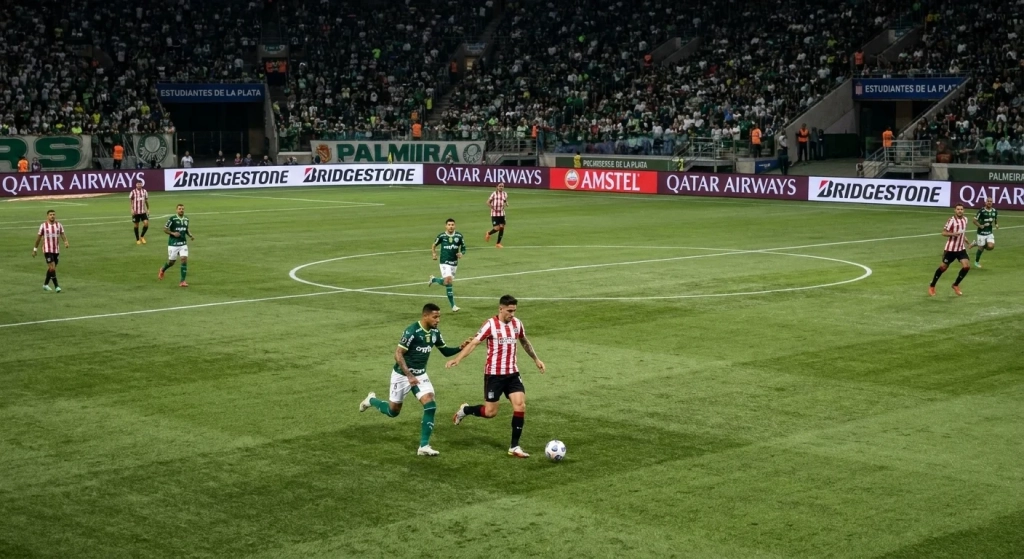
Some matches carry history before the ball even starts rolling, and this is one of those cases. When Estudiantes de La Plata and Palmeiras face off in the 2026 Copa Libertadores final at Montevideo's Estadio Centenario, there will be more than just a trophy on the line. Two storylines that seem tailor-made for this matchup will collide as well: one of absolute solidity, the other of unfinished business.
Let's start with Pincha, because its case is clear cut: Estudiantes has won both Libertadores finals it has played against Brazilian sides, and the first of those came against this very same Palmeiras squad. On the other side, Verdao carries a thorn in its side when it comes to Argentine opponents, having lost both continental finals it played against them, the 1968 final against Estudiantes itself and the 2000 final against Boca on penalties. Isn't the saying that the third time's the charm? Montevideo will have the final word.
1968, where it all began
The first time these two clubs met in a final was back in 1968, with Osvaldo Zubeldía leading an Estudiantes side that was just beginning to build its continental legend. The series was anything but simple: a 2-1 win for the Argentine side in La Plata, with goals from Eduardo Flores and Juan Ramón "la Bruja" Verón, followed by a resounding 3-1 response from the Brazilians at the Pacaembú, forcing a decisive playoff. That third match was played at none other than the Centenario in Montevideo, the very same stadium that will host the 2026 final. There, Estudiantes won 2-0, with goals from Felipe Ribaudo and Bruja Verón, to claim its first Copa Libertadores title.
Four decades later, in 2009, Pincha repeated the formula against another Brazilian club: Cruzeiro. With Alejandro Sabella in charge, Estudiantes drew 0-0 in La Plata before delivering the blow at the Mineirão, winning 2-1 thanks to goals from Gastón Fernández and Mauro Boselli to secure its fourth Libertadores title. Two finals against Brazilian opponents, two wins, two titles. A perfect record that, while it guarantees nothing, certainly carries weight.
Palmeiras' unfinished business
For Verdao, the story reads the opposite way. After falling to Estudiantes in 1968, the club faced another Argentine opponent in a final thirty-two years later, this time chasing back-to-back titles after being crowned champion in 1999 under Luiz Felipe Scolari. Boca stood in its way in the 2000 edition: after a 2-2 draw at La Bombonera and a scoreless draw at the Morumbí, the title was decided on penalties in Brazil, where Guillermo Barros Schelotto, Riquelme, Palermo and Bermúdez converted with ruthless precision for a final score of 4-2.
That history is no small detail when weighing the symbolic significance of this final. In head-to-head title matchups, Argentine clubs have had the upper hand over Brazilian ones: nine of the 16 finals played between clubs from both countries have gone the Argentine way, and Estudiantes shows up twice on that list, against both Palmeiras and Cruzeiro.
Snapping a seven-year streak
There's another detail that adds spice to this matchup: Brazil has held the Libertadores trophy for seven straight editions since 2019. Flamengo won in 2019, 2022 and 2025; Palmeiras in 2020 and 2021; Fluminense in 2023; and Botafogo in 2024. The team led by Alexander Medina, then, has a mission that goes beyond its own history: bringing the title back to Argentina after that commanding run of Brazilian dominance.
The Centenario takes center stage once again, nearly six decades after that 1968 final. Statistics don't play the games, but they help explain why this final carries a little more weight than others. Estudiantes arrives with tradition on its side; Palmeiras, with the desire to leave behind a past that, once again, stands in its way. The answer will come on the afternoon of November 28, on Uruguayan soil.