 USM
USM CRB
CRB BIS
BIS MCA
MCA JSS
JSS CSC
CSC JSK
JSK MCO
MCO ENS
ENS ASO
ASO INT
INT COR
COR REM
REM GRE
GRE RBB
RBB MIR
MIR VIT
VIT CHA
CHA BOT
BOT VAS
VAS CRU
CRU SAO
SAO LAC
LAC IND
IND GUV
GUV OP
OP FCU
FCU GUA
GUA THS
THS ITO
ITO SUP
SUP FOR
FOR PAC
PAC SHJ
SHJ GGP
GGP NJC
NJC SXU
SXU FNA
FNA GXH
GXH TAT
TAT GRI
GRI JXL
JXL DLK
DLK NHC
NHC XMF
XMF ANT
ANT UCH
UCH COQ
COQ COB
COB DYN
DYNHugo Guerra's Bizarre Header That Gave Boca an Unforgettable Superclasico
At the 72nd minute River had tied the score at La Bombonera, but the Uruguayan struck with a header as strange as it was memorable to seal the 3-2 win.

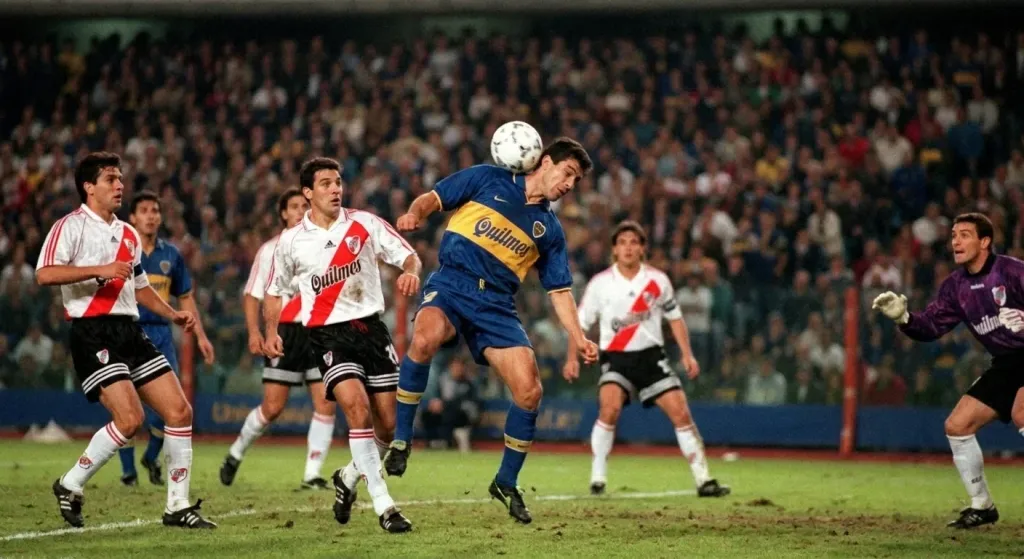
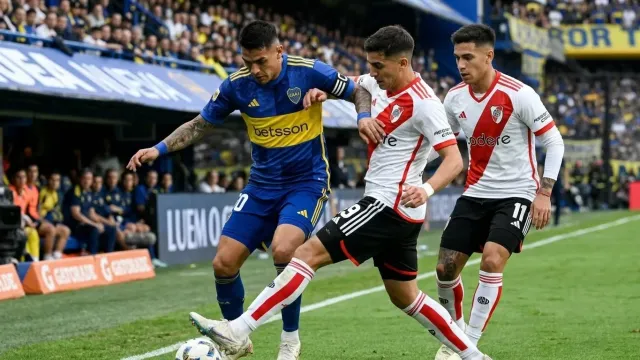
There were only a few minutes left and La Bombonera had already resigned itself to a draw. The Superclasico on September 29, 1996 stood at 2-2 and it seemed that was how the story would end. But then a Uruguayan forward who had been at Boca for only a short time jumped between two defenders and struck the ball in such a strange way that it still sparks arguments today. That deflection ended up in River's net, Boca won 3-2, and Hugo Romeo Guerra was forever linked to a single word: the "nucazo," or back-of-the-head header.
A back and forth match with Bilardo and a River side fresh off winning South America
The context was already loaded. That Boca side was coached by Carlos Bilardo and was in the middle of a rebuild. Across from them stood a River team that arrived as reigning Copa Libertadores champions, fielding names like Marcelo Salas, Ariel Ortega, Enzo Francescoli, and Juan Pablo Sorin. The match swung back and forth from the start: Roberto Pompei put Boca ahead at the five minute mark, Salas equalized almost immediately, and that was how it stood at halftime. In the second half, Gabriel Cedres converted a penalty to put the home side back in front, but Sorin popped up at minute 72 to make it 2-2. River could smell a draw at La Bombonera.
That's when the play arrived that changed everything. A foul by Hernan Diaz on Cedres gave Boca a set piece, the kind played with zero margin for error. Mauricio Pineda took the corner from the left, Guerra maneuvered between Eduardo Berizzo and Roberto Ayala, won the right position, and connected in a way Germán Burgos could never have imagined. The ball went in, the clock was running out, and the Uruguayan sprinted to the fence to climb up and celebrate with the fans.
"It's the goal of my life," Guerra said after that night. Years later, he could still reconstruct the moment through one particular detail:
What I remember most about the goal is Ramón Díaz's face. He stood there with his mouth wide open.Hugo Romeo Guerra
"It wasn't a nucazo": the clarification that never changed anything
The image of that finish, with Guerra almost facing away from the goal, lent itself perfectly to the popular nickname. But years later, he himself always wanted to correct the official version: "It wasn't a nucazo, I hit it with the right side of my head, the parietal." In another interview he was even more precise about how the contact actually happened:
Honestly it wasn't a nucazo, I caught it sideways, but Araujo called it that way on the broadcast and it stuck.Hugo Romeo Guerra
The call from Araujo, the television announcer for that match, ended up carrying more weight than the clarification from the man himself. The name was already fixed among the fans, and there it stayed.
There's one detail that makes the whole scene make sense: Guerra stood 6 feet 2 inches tall and had built much of his game around aerial play since he was a kid. "Since I hit my growth spurt before the other kids, I scored tons of headers," he said in 1996. Bilardo knew about that trait when he asked for Guerra to join Boca, just weeks before that Superclasico.
A newly arrived forward who became the protagonist
Guerra had come from Huracan, and that match was just one of his first official appearances in Boca's jersey. He had played derbies before, with Nacional against Penarol in Uruguay, with Gimnasia against Estudiantes in La Plata, and with Huracan against San Lorenzo, but nothing compared to what he had just experienced. "There's nothing else like a Boca-River match anywhere in the world. After the celebrations I was convinced: it must be the most important match in the world," he said. Recalling the stadium itself, he said years later: "La Bombonera is hell. You have to play there to understand what it feels like. In that Superclasico nothing made sense, it was all screaming, flares. Pure madness."
The goal also changed his everyday life overnight. "I'm a lot more recognized now," he admitted in 1996, even laughing about the fallout among friends: "I have friends who are River fans and they always curse me out over that goal, ha."
Guerra had a long career, with stints at Nacional, Penarol, Gimnasia, Huracan, Boca, and Ferro, among other clubs. His time at Boca was brief, but it was enough to link him forever to one of the most memorable images in Superclasico history. He summed it up himself: "I scored 90 goals, but that one against River is what made me known." And years later, with a touch of nostalgia, he admitted: "I regret leaving Boca. Bianchi arrived right after and built a beautiful team. I made a bad decision."
Over time he settled in Arrecifes and got involved in auto racing, without fully leaving the world of soccer behind. He died on May 11, 2018, at age 52. By then, that jump between Berizzo and Ayala, that ball deflected sideways that fans preferred to call the nucazo, already had a life of its own in the memory of the Superclasico.