 ATH
 RSO
 VAN
 SEA
 JUV
 NAP
 MAR
 TOU
 ATO
 FOR
 PAL
 VAS
 THS
 GUV
 CCP
 OLI
 CAG
 UNI
 LEX
 COS
 BRA
 FAM
 ATL
 TOR
 NSH
 RBNY
 NE
 MIA
 LAF
 MIN
 POR
 HOU
 CSL
 NCX
 CAZ
 LEO
 RFA
 FSC
 SMT
 COL
 GTI
 QAC
 VAR
 MOR
 SUP
 CAV
 ISF
 ONC
 GRE
 ATL
 ATL
 ALI
 AGU
 FAS
 ANT
 MUN
 GUA
 COB
 COM
 MIX
 MOT
 MAR
 OLA
 GUA
 BOL
 FCU
 CAR
 LA
 BOS
 BAY
 SD
 GFC
 UTA
 HOU
 POR
Why the best club coaches now run national teams (and why it hasn't improved results)
Pochettino, Ancelotti, Tuchel, Zidane and Klopp now coach national teams, but the lack of time to train explains why their sides never quite take off.

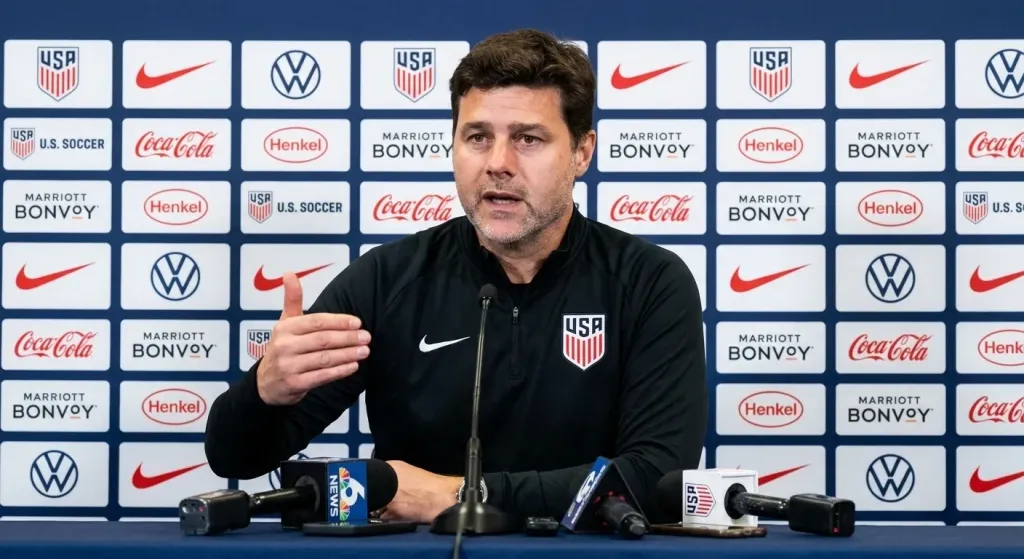
Just six years ago, the national team coaching landscape looked completely different. Gregg Berhalter in the United States, Tite in Brazil, Gareth Southgate in England, Didier Deschamps in France and Jogi Low in Germany: solid names, well versed in national team soccer, but none of them was, in 2019, the most coveted coach on the planet.
Today the picture is entirely different. Mauricio Pochettino coaches the United States, Carlo Ancelotti leads Brazil, Thomas Tuchel is in charge of England, Zinedine Zidane runs France and Jurgen Klopp oversees Germany. Five names who, back in 2019, sat at the absolute peak of club soccer: Pochettino with a Champions League finalist Tottenham, Ancelotti at Napoli, Tuchel managing Neymar and Mbappe at PSG, Zidane winning titles with Real Madrid, and Klopp as Europe's reigning champion with Liverpool. Why did the world's best coaches suddenly end up with national teams? And if that's the case, shouldn't these countries be improving in obvious ways?
Club soccer was, and still is, the summit
Years ago, Maurizio Sarri, then at the height of his tactical influence at Chelsea, said something that turned out to be prophetic. He admitted he hadn't even watched the 2018 World Cup.
I don't like the national team because there's nothing to learn. It's impossible to organize a team properly in 30 days. Any team at the World Cup would lose to top level clubs in any given match.Maurizio Sarri
The underlying idea was simple: at clubs there are no borders restricting who you can sign, coaches work with their squads every single day, and the money from European competitions, especially the Champions League, means the best players always end up with the best coaches. Every elite coach wants full control over who plays and how they play, and that's far easier to achieve at a club than during a ten-day camp.
There are fewer and fewer top benches available
But that same control once exercised at the big clubs has steadily shrunk. Clubs have shifted from having "coaches" with total authority to having "head coaches" who only make decisions on the training ground, while others handle signings and departures. On top of that, the truly elite jobs (eight figure salaries with real title chances) can be counted on one hand: the so called English Big Five, Barcelona, Real Madrid and Atletico in Spain, PSG in France, Bayern in Germany. In Italy, not even that: no coach of that caliber has arrived in Serie A since Antonio Conte left Chelsea for Inter in 2019. Somewhere between three and five vacancies of that level open up each year, and you have to compete for them against other available elite coaches. National teams, on the other hand, offer something increasingly scarce at clubs: total control over call ups and playing style, stability (Premier League benches last an average of under 18 months), and competitive salaries without the financial constraints of club soccer. The United States could pay Pochettino what no mid tier club could ever afford.
But the results aren't following
If top coaches make such a difference for their teams at clubs, shouldn't they make an even bigger difference with national teams, where the average level of coaching is lower? Recent evidence suggests otherwise. Luis Enrique and Hansi Flick, now considered among the best coaches outside England, both failed before with their national teams: Flick's Germany crashed out in the group stage at the 2022 World Cup, and Luis Enrique's Spain lost to Morocco in the round of 16 despite dominating 77 percent of possession, managing just one shot on target. During their respective spells in charge of their national teams, both sides' performance, measured by Elo ranking, actually dipped slightly. Luciano Spalletti's case is similar. After leading Napoli to a historic league title in the 2022-23 season, he took over the Italian national team. He was eliminated in the round of 16 at the Euros by Switzerland and was fired in the middle of qualifying for the 2026 World Cup. His own words sum up the frustration well:
The coach has to make a difference, the players have to make a difference, and unfortunately I didn't make a difference.Luciano Spalletti
It's not all failure, of course. Deschamps won a World Cup with France and lost another final on penalties over nearly 15 years in charge. Louis van Gaal took the Netherlands from sixth to second in the Elo ranking between 2012 and 2014. Marcello Lippi won the 2006 World Cup with Italy following his success at Juventus. But the list of disappointments is, at the very least, just as long: Jorge Sampaoli with Argentina, Marcelo Bielsa with Uruguay (who went so far as to call himself "toxic"), Julian Nagelsmann with Germany, Fabio Capello with England. And this past summer, neither Tuchel, Ancelotti nor Pochettino managed to improve on what their predecessors had done.
The most convincing explanation circles back to Sarri's complaint: these coaches, however great they may be, simply have no time to train their teams. Pochettino managed 33 matches with the United States over two years; in his last full season with Tottenham, the team played 56 matches in 10 months. Much of the job at a national team (scouting, relationships with clubs, long term planning) has little to do with the day to day tactical obsession that defines club soccer. It's perhaps no coincidence that the last two World Cup winning coaches have, between them, zero Champions League matches managed.